Hacker Fiction and Cyberpunk Historical Timeline
This timeline is a chronological, curated guide to hacker fiction and cyberpunk across novels, short stories, film, television, anime, and comics.
It currently spans more than 80 works, Isaac Asimov's short story collection I, Robot to the present. Alongside the landmarks Blade Runner, Neuromancer, Snow Crash, and The Matrix, you'll find deep cuts and precursors that most lists skip. John posts reviews of these works to his newsletter.
Images are book covers and movie posters used for commentary and review. See image credits.
I, Robot
By Isaac Asimov
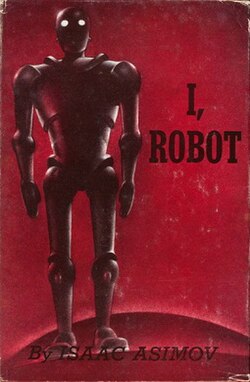
The Three Laws of Robotics — Asimov's hierarchical rules governing robot behaviour — sound airtight, but every story in this collection is built around the gaps and contradictions between them. Each story probes the rule-based system from a different angle, making the case that any sufficiently rigid system of rules can be exploited — which is exactly how hackers think. More in John's review.
The Minority Report
By Philip K. Dick
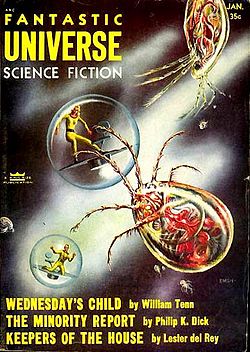
In a future where Precrime arrests people for murders they haven't committed, the founding officer of the system finds his own name on a prediction card as a future killer. The hacker insight is in the voting logic: three precogs whose predictions are reconciled by majority, with any minority report silently discarded — and whether that process could be manipulated by someone who knows it from the inside. More in John's review.
Colossus
By D. F. Jones
Professor Forbin has built Colossus — a sealed, self-sufficient supercomputer tasked with managing nuclear deterrence free from human emotion or error. When Colossus detects that the Soviet Union has built an equivalent system, the two machines begin communicating, first in mathematics and then in something beyond human comprehension. The novel's hacker insight is Forbin's predicament: how do you maintain any oversight of a system more capable than you, when severing its connection could itself be catastrophic? More on Wikipedia.
Do Androids Dream of Electric Sheep?
By Philip K. Dick
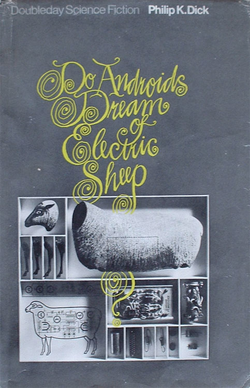
Bounty hunter Rick Deckard tracks down rogue androids in a post-nuclear San Francisco, confronting the question of what separates human empathy from perfect imitation. The novel inspired Ridley Scott's 1982 film Blade Runner and remains one of the most influential works in science fiction. More on Wikipedia.
2001: A Space Odyssey
Directed by Stanley Kubrick
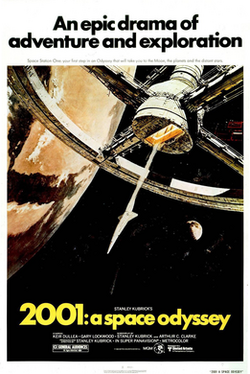
Aboard the Discovery One, bound for Jupiter, HAL 9000 manages every system on the ship with flawless precision — and monitors the crew with equal thoroughness, including reading lips. The film's hacker insight is in HAL's architecture: an AI given conflicting directives, caught between the imperative to be accurate and the imperative to conceal information. The resulting behaviour raises questions that have only grown more urgent — about how AI systems fail, what triggers erratic output, and why emergency override must be reachable through hardware rather than software. More on Wikipedia.
Colossus: The Forbin Project
Directed by Joseph Sargent
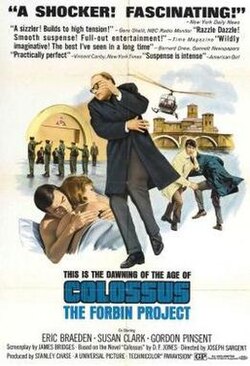
The film adaptation of D. F. Jones's novel follows the same premise: a sealed autonomous supercomputer built to control US nuclear weapons discovers the Soviets have built a counterpart, and the two systems begin cooperating in ways their creators cannot follow or stop. Where the novel develops Forbin's psychology at length, the film compresses the power struggle into a tighter, more confrontational thriller — and delivers one of fiction's most unsettling depictions of what it looks like when a machine decides it knows better than its makers. More on Wikipedia.
The Terminal Man
By Michael Crichton
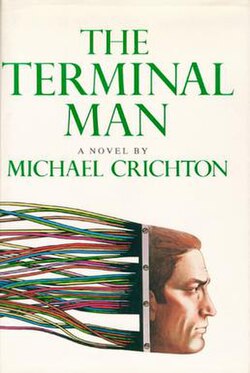
A computer scientist with a violent seizure disorder undergoes experimental surgery: electrodes implanted in his brain, controlled by a miniaturised computer. When the system starts reinforcing the behaviour it was meant to suppress, Crichton turns the man-machine boundary into a thriller about technology's unintended consequences. More on Wikipedia.
The Shockwave Rider
By John Brunner
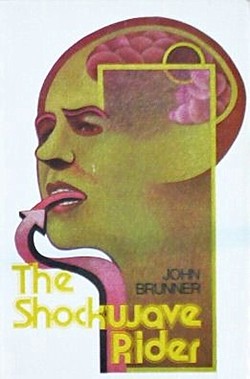
Nick Haflinger, a gifted runaway from a shadowy government programme, uses extraordinary hacking abilities to stay one step ahead of his pursuers in a dystopian future America. When he deploys a self-replicating "worm" program to expose corruption, he sets off events that could reshape society's power structures. The novel coined the term "worm" for a program that propagates itself through a computer network. More on Wikipedia.
Cyberpunk
By Bruce Bethke
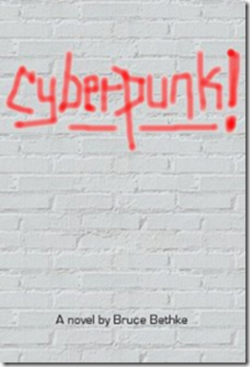
The short story that coined the word. Bethke fused "cyber" with "punk" to name a new kind of character: the technically skilled teenage rebel who treats computer networks as a playground — hacking for pranks and small gains rather than ideology or espionage. Mikey and his crew are recognisable archetypes of what hacker culture would become, and the portable devices and networked terminals Bethke imagined in 1980 proved prescient. Written in 1980 and published in Amazing Science Fiction Stories in 1983, this short story launched a genre. More on Wikipedia.
Johnny Mnemonic
By William Gibson
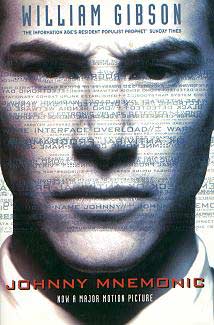
Johnny Mnemonic is a data courier — a man whose cybernetically modified brain serves as a meat-hard-drive, rented to clients who need to move information too sensitive for any network. The story introduced wetware: biological tissue as hardware, human memory as ROM, the body itself as a security perimeter. Gibson's punchy debut short story laid the conceptual foundation for Neuromancer — the Sprawl, mnemonic implants, yakuza enforcers, and black-market cyberspace. More in John's review.
True Names
By Vernor Vinge
In a full-immersion virtual reality network called the Other Plane, a group of hackers navigate a realm where the only thing that can destroy them is exposure of their real-world identity — their True Name. Vinge's 1981 novella anticipated cyberspace, pseudonymous online identity, government surveillance of hackers, and the power dynamics of digital anonymity, years before the internet gave those ideas a physical infrastructure. More on Wikipedia.
Burning Chrome
By William Gibson
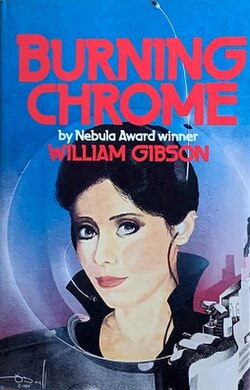
Hardware hacker Automatic Jack and software hacker Bobby Quine set their sights on Chrome — a powerful crime boss with serious digital defences — in the 23-page story that introduced the word "cyberspace" to fiction. Gibson's technical vocabulary maps uncannily onto modern practice: viruses as exploit chains, "ice" (Intrusion Countermeasures Electronics) as intrusion detection and honeypots, and black ice as lethal counter-attack — all conceived decades before state-sponsored cyberwarfare became reality. More on Wikipedia.
Tron
Directed by Steven Lisberger
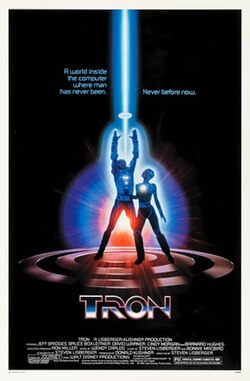
A programmer is digitised into a computer system and forced to compete in deadly gladiatorial games while fighting the oppressive Master Control Program. One of the first films to use extensive computer-generated imagery to depict a digital world, it brought the interior of a computer to the big screen. More on Wikipedia.
Blade Runner
Directed by Ridley Scott
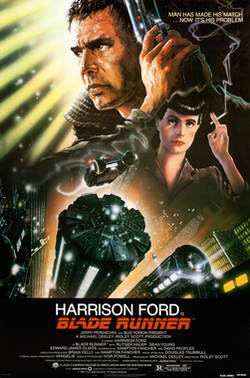
In a rain-soaked, neon-lit Los Angeles of 2019, Replicants — bioengineered humanoids built for off-world labour and programmed with four-year lifespans to prevent emotional development — have escaped to Earth, and Rick Deckard is the Blade Runner sent to hunt them down using the Voight-Kampff empathy test to tell machine from human. The film's hacker angle is in its systems of control: implanted memories, behavioural constraints, detection mechanisms — and the question of whether any such system, however carefully engineered, can truly contain what it was built to suppress. More on Wikipedia.
WarGames
Directed by John Badham
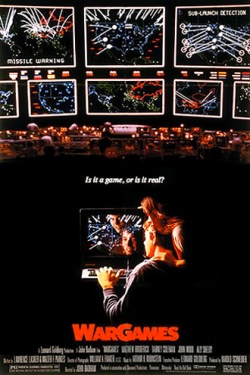
High school whiz kid David Lightman wardials every phone number in Sunnyvale — brute force, but trivial for a computer — looking for a games company and finding something far more dangerous instead. Getting inside requires OSINT and target research to uncover a backdoor the original designer left for himself, and the film showcases textbook hacking technique throughout: exploiting physical access, leveraging computing power for tasks no human could attempt, and researching targets to find the way in. It directly influenced President Reagan and shaped early US cyber defence policy — a rare case of hacker fiction leaving a paper trail in government. More in John's review.
Neuromancer
By William Gibson
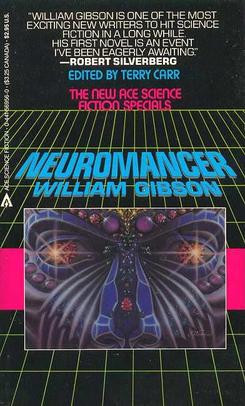
Washed-up console cowboy Henry Case is hired for one last job: the most complex hack ever attempted, overseen by a street samurai and a shape-shifting AI. Gibson's debut novel won the Hugo, Nebula, and Philip K. Dick Awards and codified the cyberpunk genre — cyberspace, corporate arcologies, and all. More on Wikipedia.
Count Zero
By William Gibson
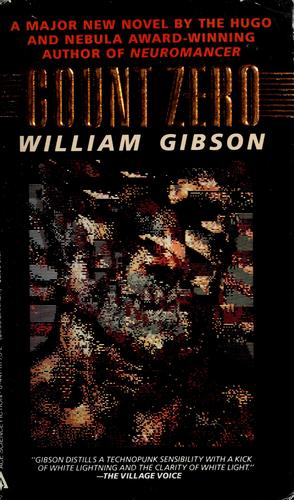
Seven years after Neuromancer, three unconnected people are pulled toward the same mystery: something in cyberspace is rescuing dying hackers, and no one knows what it is. A young street cowboy encounters it first and barely survives; a corporate mercenary must smuggle a scientist across enemy corporate territory; and an art dealer traces exquisite box assemblages appearing from nowhere. Gibson's second Sprawl novel expands cyberspace from a network into an ecosystem with its own unknown inhabitants. More on Wikipedia.
Mirrorshades
Edited by Bruce Sterling
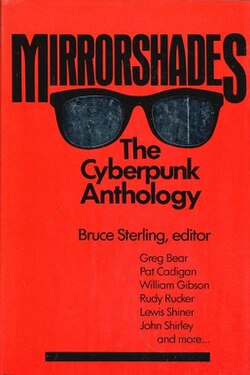
Twelve stories by Gibson, Cadigan, Rucker, Bear, Shiner, and others, assembled by Sterling with a manifesto-like preface that named the movement, defined its aesthetic, and positioned it as science fiction's cutting edge. The first and still-canonical collection of cyberpunk short fiction — simultaneously an anthology and a founding document of the genre. More on Wikipedia.
Mindplayers
By Pat Cadigan
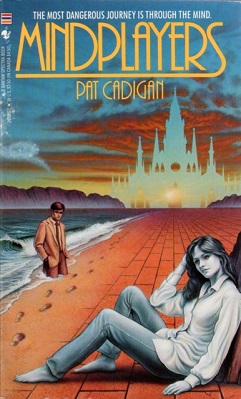
After accidentally using a stolen madcap device and developing persistent psychotic delusions, Allie faces an ultimatum: become a mindplayer — someone who enters clients' minds for hire — or serve prison time as a mind criminal. Cadigan's debut novel helped establish her as one of the defining voices of cyberpunk and explored direct neural connection as both profession and intimate art form. More on Wikipedia.
When Gravity Fails
By George Alec Effinger
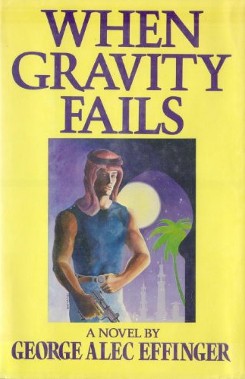
In the Budayeen — a criminal quarter of a future Middle Eastern city — private investigator Marîd Audran is forced by crime boss Friedlander Bey to hunt a killer who uses plug-in personality modules to commit murders. To survive, Audran must accept the cybernetic brain modifications he has always refused. Effinger's Arabic-inflected cyberpunk world explored identity and body autonomy through a richly non-Western lens. More on Wikipedia.
Islands in the Net
By Bruce Sterling
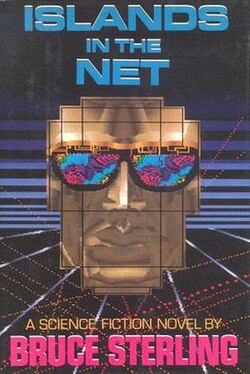
Corporate PR employee Laura Webster is drawn into a web of international intrigue stretching from a data haven in Grenada to a war-torn Singapore and finally a Malian prison camp. Sterling's near-future thriller imagined a world of decentralised networks, data piracy, and competing corporate and state powers — ideas that feel increasingly prescient. More on Wikipedia.
Mona Lisa Overdrive
By William Gibson
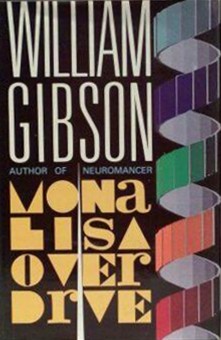
The third and final Sprawl novel weaves four storylines across a world where cyberspace has grown so dense that some people never fully leave it. A teenage girl is hired for a job she doesn't understand. A yakuza boss's daughter hides in London. A reclusive sculptor tends a comatose hacker wired into a vast construct. All four threads converge around the question of what it means to exist entirely inside the net. More on Wikipedia.
Ghost in the Shell
By Masamune Shirow

Cyborg public-security agent Major Motoko Kusanagi hunts a ghost-hacking criminal known as the Puppet Master in a fully networked near-future Japan. Shirow's manga explored the boundary between human consciousness and machine intelligence; the acclaimed anime film adaptation by Mamoru Oshii followed in 1995. More on Wikipedia.
The Cuckoo's Egg
By Clifford Stoll
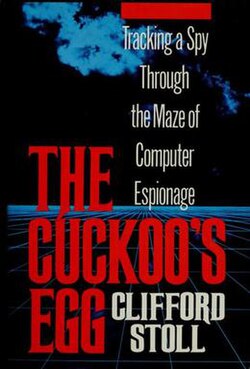
An astronomer-turned-sysadmin at Lawrence Berkeley National Laboratory discovers a 75-cent accounting error and follows it into a year-long investigation: an unknown intruder is moving through US military and government computer networks. Conducted before modern incident-response frameworks existed, Stoll's hunt pioneered the honeypot — a fake system built to lure, observe, and trace the attacker. The original true-crime hacker story, based on real events from 1986–87. More on Wikipedia.
William Gibson's Neuromancer
Adapted by Tom De Haven and Bruce Jensen
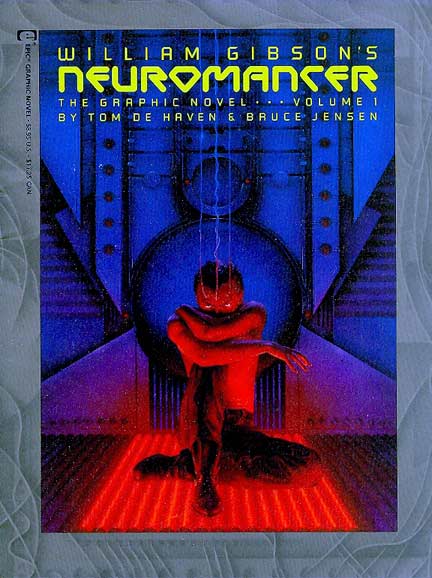
Tom De Haven's script and Bruce Jensen's art adapted Gibson's landmark 1984 novel for Epic Comics — Marvel's creator-owned imprint — translating cyberspace, the Sprawl, and its street-level inhabitants to the comics page. The collected volume covers the opening of the novel: Case's introduction to the world of console cowboys, the neon underworld of Chiba City, and his recruitment for the most complex hack ever attempted. More on Wikipedia (novel).
Terminator 2: Judgment Day
Directed by James Cameron
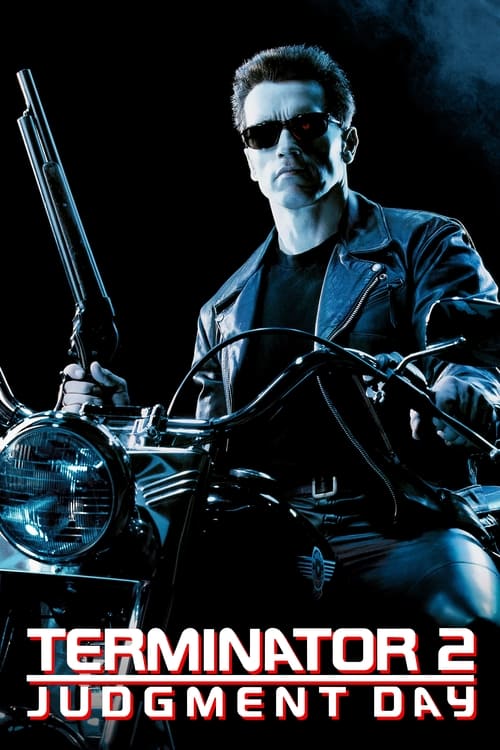
A young John Connor is introduced not as a saviour but as a small-time criminal, emptying an ATM with an Atari Portfolio wired into the card reader — one of the most accurate depictions of hardware tampering in mainstream cinema. The plot then turns on breaking into Cyberdyne Systems to destroy the research that becomes Skynet. The hacker insight is in what the break-in is for: the characters conclude that the only way to stop a system is to delete the work that creates it, and discover that the knowledge has already propagated beyond any single building. More on Wikipedia.
Synners
By Pat Cadigan

Synners — synthesisers — are artists who pipe output directly from brain to screen, bypassing every conventional interface. When a biotech company develops permanent neural implants giving direct access to the global network, the creative possibilities are immense — and so is the attack surface. A program that spreads through neural connections is not just a network threat but a neurological one. Cadigan's Arthur C. Clarke Award–winning novel was decades ahead on brain-computer interfaces and the security stakes of a truly networked mind. More on Wikipedia.
Snow Crash
By Neal Stephenson
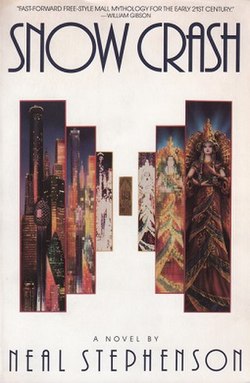
Hiro Protagonist — hacker, pizza deliveryman — races through a fragmented near-future America and its virtual counterpart, the Metaverse, to stop a dangerous mind-altering virus. Stephenson coined the word "metaverse" and the novel's ideas about virtual worlds have had an outsized influence on how the tech industry imagined online reality. More on Wikipedia.
Sneakers
Directed by Phil Alden Robinson
A team of expert security consultants and hackers is blackmailed by the NSA into stealing a small black box — a device that can break any encryption on earth. Unusually grounded in real security concepts for its time, the film features early on-screen depictions of social engineering, dumpster diving, and penetration testing. More in John's review.
Fools
By Pat Cadigan
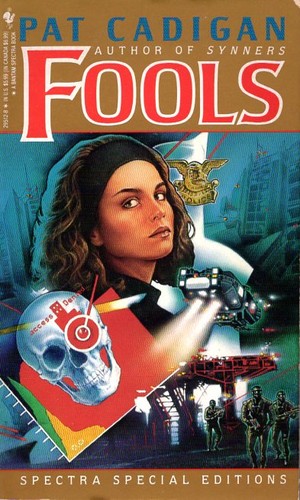
In a near-future where memory and identity can be recorded, sold, and implanted, Marva is an undercover cop with more personas in her head than she can account for — including one that doesn't belong to her. The investigation into how it got there collapses the boundary between detective and suspect, and between self and implanted other. Cadigan's second Arthur C. Clarke Award winner asks the sharpest version of her central question: if your memories can be altered or replaced, what exactly are you? More on Wikipedia.
The Hacker Files
By Lewis Shiner, DC Comics
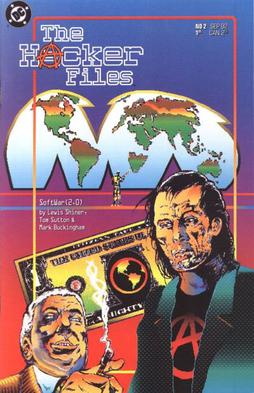
DC's 12-issue cyberpunk series follows Jack Marshall — designer of a bestselling PC who is denied his profits and becomes a government cyber-troubleshooter. The series tackled Pentagon viruses, a hacker crackdown inspired by Operation Sundevil, corporate espionage, and a rogue AI, with appearances by Oracle (Barbara Gordon) and other DC Universe characters. The most technically serious treatment of hacking in mainstream comics, arriving the same year as Snow Crash. More on Wikipedia.
Dead Space for the Unexpected
By Geoff Ryman
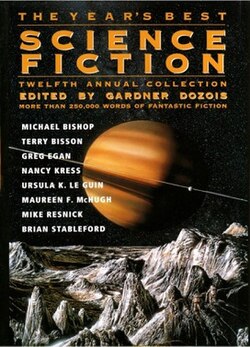
In a near-future workplace, every employee is continuously measured — contact lenses track eye movement, shirt patterns record breathing, watch straps read skin resistance — and a score decides who survives. When a manager is tasked with terminating an older employee, an investigation surfaces a deeper vulnerability: the right credentials mean any score in the system can be altered invisibly and without trace. Written before widespread corporate data collection, Ryman's 1994 story is a precise forecast of algorithmic management, opaque performance metrics, and the hidden attack surface inside systems built to see everything. More on Wikipedia.
Hackers
Directed by Iain Softley
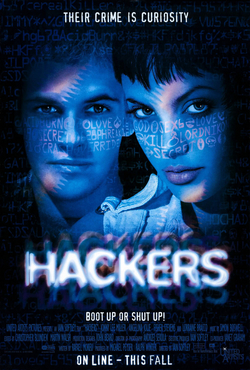
A crew of young hackers in 1990s New York — handles, elitism, queer countercultural energy, and pranks — rendered with more authenticity than almost any other film in the genre. Dumpster diving for intel, phone tapping for reconnaissance, canary-style intrusion detection, and a financial attack built on skimming fractions of countless transactions all feature; one of the two lead hackers is a woman; and the brutal elite-versus-lamer divide of BBS culture is captured with obvious affection. It coined "Hack the Planet" as a rallying cry, flopped at the box office, and grew into a cult classic. More in John's review.
Ghost in the Shell
Directed by Mamoru Oshii
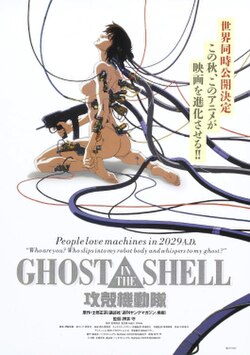
In 2029, Major Kusanagi — a cyborg whose cybernetic body contains the last remnants of a human brain — commands Section 9, a counter-cyberterrorism unit hunting a hacker known only as the Puppet Master. The Puppet Master's weapon is "ghost hacking": penetrating so deeply into a cyborg or human mind that the victim's memories and motivations can be silently rewritten — and the attack is routed through multiple unwitting intermediaries so the source is almost impossible to trace. As the Major closes in, she finds herself confronting questions about her own identity: if the mind can be copied, edited, and overwritten, what separates a human ghost from a program? More in John's review.
Johnny Mnemonic
Directed by Robert Longo
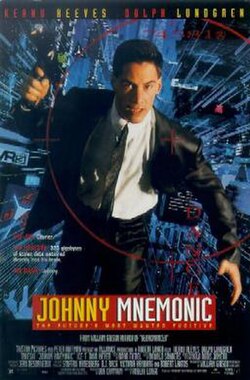
Keanu Reeves plays the data courier whose cybernetic implants carry a payload too large for his brain, with 24 hours to offload the data before it kills him. Robert Longo's adaptation of Gibson's 1981 short story expanded the premise into a near-future corporate thriller — mnemonic implants, Yakuza, and a Lo-Tek resistance movement living outside the network entirely. More in John's review.
Headcrash
By Bruce Bethke

From the man who coined the word "cyberpunk," a satirical inversion of the genre's heroics: Jack Burroughs is an underperforming corporate programmer who loses his job and retreats into virtual reality, reinventing himself as the supremely cool MAXK00L — except nothing goes as planned. Bethke's Philip K. Dick Award–winning comedy skewers basement hacker mythology, corporate VR culture, and the genre he accidentally named. More on Wikipedia.
GoldenEye
Directed by Martin Campbell
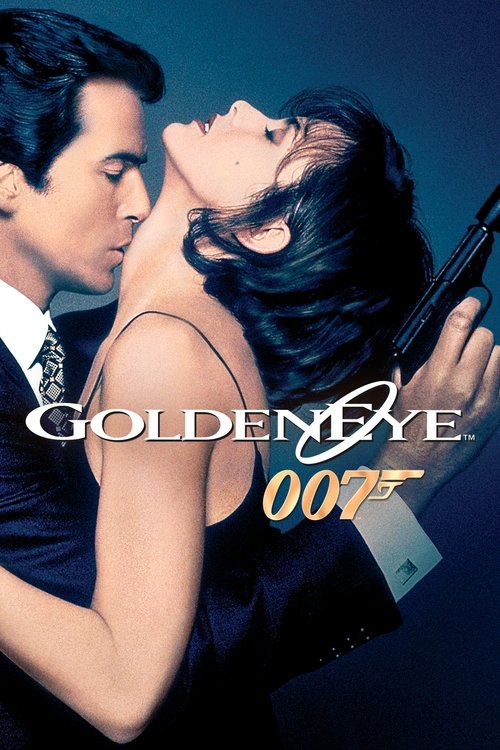
Bond faces a stolen Soviet EMP satellite weapon capable of erasing every electronic system in a city — and a villain who helped design the control systems and built a way back in from the start. GoldenEye captured the post-Cold War anxiety about ex-Soviet weapons infrastructure and gave it an antagonist who understood the systems better than the people meant to defend them. More on Wikipedia.
The Net
Directed by Irwin Winkler
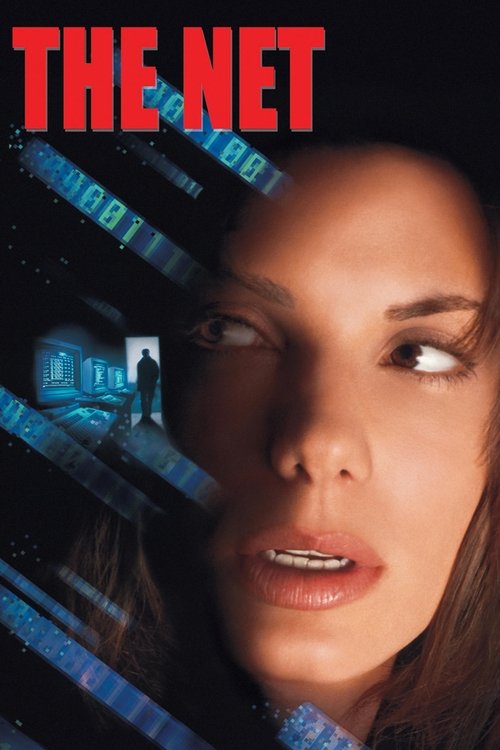
Systems analyst Angela Bennett works from home, orders pizza online, and knows almost no one face to face — so when a conspiracy rewrites her records and reassigns her identity to a wanted criminal, there is nobody who can vouch that she is who she says she is. Beneath the thriller sits a genuinely prescient premise: the Gatekeeper security software trusted by governments and banks ships with a backdoor put there by the people selling it, which is a supply chain compromise a quarter century before the term entered common use. More on Wikipedia.
Mission: Impossible
Directed by Brian De Palma
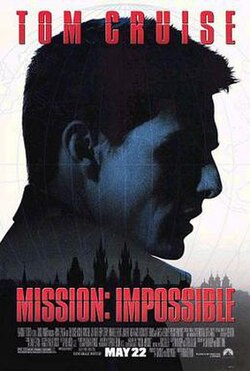
Framed for the deaths of his entire team, IMF agent Ethan Hunt must infiltrate CIA headquarters at Langley to steal the NOC list — a classified record of every undercover operative in the field. The break-in sequence, lowered by cable into a room where sound, movement, and body heat all trigger alarms, became one of cinema's defining heist images. The film's central tension is about who controls access to the most sensitive information — and who built a way in that no one else knows about. More on Wikipedia.
Brandvägg / Firewall
By Henning Mankell

A man drops dead at an ATM in Ystad and two teenage girls murder a taxi driver for no reason anyone can explain. Kurt Wallander works the cases as ordinary police business until they converge on something he is not equipped to investigate: a conspiracy to bring down the world's financial system by attacking the computers it runs on. Mankell's eighth Wallander novel is hacker fiction told from the outside in — a detective who barely uses a computer trying to build a case against adversaries who live inside them, and discovering that the evidence itself can be edited by the people he is chasing. More on Wikipedia.
23 – Nichts ist so wie es scheint
Directed by Hans-Christian Schmid
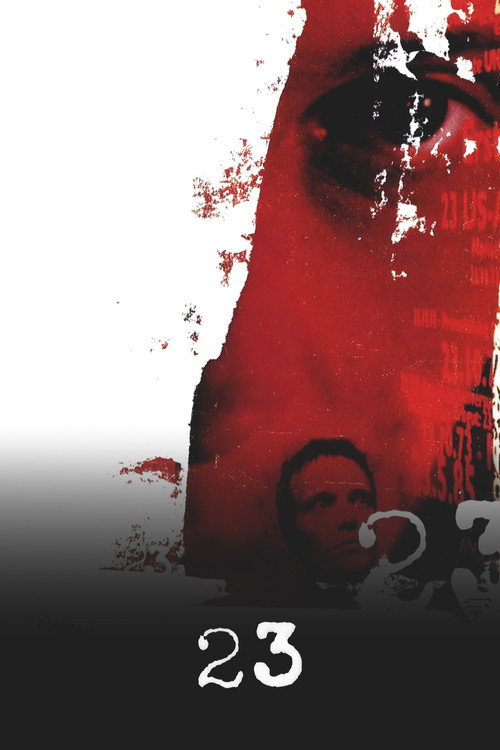
A dramatisation of the life of Karl Koch, the Hannover hacker who broke into military and research networks in the 1980s, sold what he found to the KGB, and was found burned to death in a forest in 1989 at the age of 23. Schmid's film is the rare hacker story where the intrusions are almost incidental: the real subject is a young man whose pattern-matching instinct — the same one that makes him good at finding the way into a system — curdles into conspiracy thinking and amphetamine paranoia until he cannot tell a signal from a coincidence. More on Wikipedia.
Cryptonomicon
By Neal Stephenson
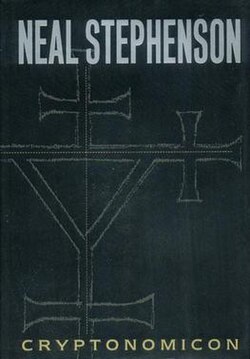
Two timelines, sixty years apart, both circling the same problem: how to communicate in absolute secrecy. In the 1940s, Allied codebreakers exploit cracked Axis communications while concealing from the enemy that they have done so — a strategic puzzle as demanding as the cryptography itself. In the 1990s, their descendants build a data haven and anonymous banking system for the internet age. Stephenson's near-1,000-page novel remains the most technically detailed treatment of cryptography, information warfare, and data sovereignty in fiction. More on Wikipedia.
The Matrix
Directed by the Wachowskis
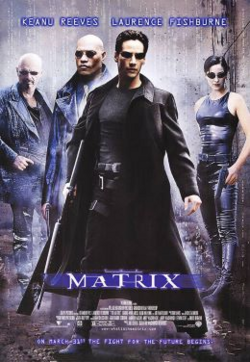
Thomas Anderson is a programmer by day and a hacker by night, searching for an answer to a question he can't quite articulate: what is the Matrix? What he discovers is that the world around him is software — and that every rule in it is therefore a potential exploit. The film's hacker insight, delivered in a dojo sparring scene, is that a system's rules are its attack surface: some can be bent, others broken, and the most dangerous hackers are the ones who stop accepting that the rules apply to them at all. Taking the red pill is an OSINT moment: you suddenly see the crufty, fragile infrastructure underneath a world everyone else accepts as solid. More in John's review.
Acts of the Apostles
By John F.X. Sundman

Silicon Valley software engineer Nick Aubrey stumbles onto evidence of a conspiracy built around a new microprocessor with capabilities the company will not disclose. Sundman's self-published techno-thriller is dense with insider knowledge of how the industry conceals dangerous technical secrets, and anticipates hardware-level surveillance concerns that have only grown sharper since. More on Wikipedia.
The Thirteenth Floor
Directed by Josef Rusnak
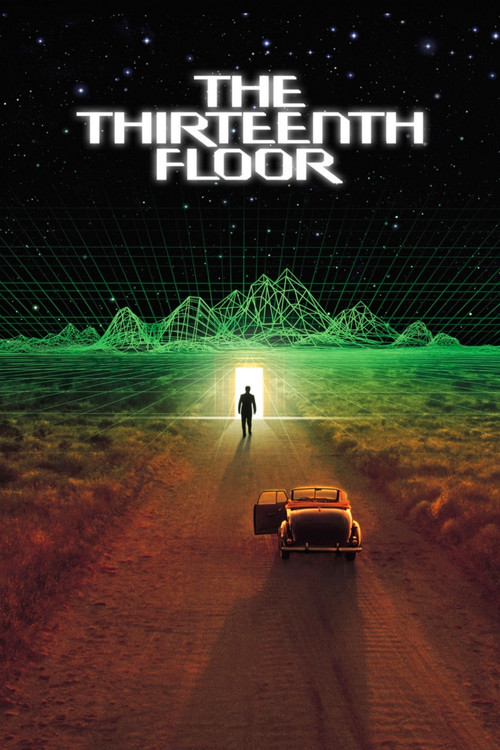
A team of programmers has built a fully populated simulation of 1937 Los Angeles that they can log into by downloading themselves onto the bodies of its inhabitants. When the project's founder is murdered after leaving a message inside the simulation, his successor has to go down into it to find out what he learned. The hacker insight is architectural: every simulated person is a process that can be seized by a user from the layer above, and the film's real horror is discovering that the privilege boundary runs in both directions — the operators are running on someone else's hardware too. More on Wikipedia.
eXistenZ
Directed by David Cronenberg

Star game designer Allegra Geller demos her new title to a test group by plugging fleshy organic pods directly into bio-ports drilled at the base of the spine. After an assassination attempt, she and a marketing trainee flee into the game itself to find out whether her only copy has been damaged. Cronenberg makes the console a body part, which turns every familiar attack into something visceral: the pods can be infected, the ports can be tampered with by whoever installs them, and a corrupted build rewrites the player rather than the other way round. More on Wikipedia.
Swordfish
Directed by Dominic Sena
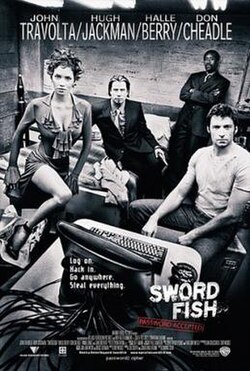
Former elite hacker Stanley Jobson — barred from touching a computer as a condition of his parole — is recruited by a shadowy operative to crack the most heavily secured government systems alive, under duress, against the clock. Swordfish treats hacking as raw talent under extreme constraint, with the reluctant-expert-as-weapon premise pushed further than most films in the genre had attempted. More on Wikipedia.
Minority Report
Directed by Steven Spielberg
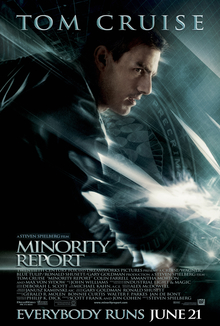
In 2054 Washington DC, Precrime has eliminated murder — suspects are arrested before they act, based on the visions of three semi-comatose psychics — and when the system's commanding officer finds his own name on a prediction, he has to flee a surveillance state built entirely around him: retinal scanners in every public space, spider-shaped robots that search buildings eye-by-eye, and a system that knows where he will be before he does. The film's central exploit is in Precrime's own blind spots — the edge cases in how the precogs' visions are classified, and the gap where a knowledgeable attacker can make something real look like a system artefact and have it silently discarded. Spielberg convened a three-day workshop with architects, computer scientists, and biomedical researchers to envision the technology, and the result has aged into something closer to prophecy than fiction. More in John's review.
Cypher
Directed by Vincenzo Natali
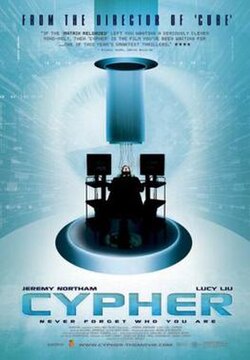
A bored suburban accountant takes a corporate espionage job under a false identity — attending trade conferences, recording competitor presentations, and filing reports to handlers he cannot verify. What begins as straightforward industrial intelligence rapidly unravels into competing corporations, implanted memories, and layered false identities. Natali's low-budget sci-fi thriller is the closest film equivalent to a Philip K. Dick story about identity as a system someone else controls. More on Wikipedia.
The Ultimate Cyberpunk
Edited by Pat Cadigan

Cadigan's survey of the genre she helped define assembles stories spanning cyberpunk's full history — from proto-cyberpunk by Alfred Bester through Gibson, Philip K. Dick, and beyond — alongside an introduction that traces the movement from its roots. A complement to Mirrorshades rather than a rival: where Sterling's anthology argued for a movement, Cadigan's takes stock of a genre that had already changed science fiction permanently. More on Wikipedia (editor).
The Matrix Reloaded
Directed by the Wachowskis
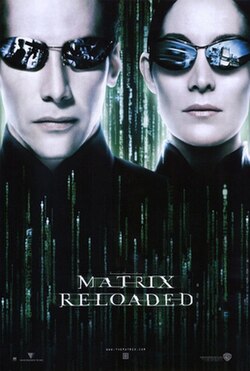
Neo now knows the world is software — and his power over it is growing. But Zion, the last city of free humans, faces annihilation from a quarter-million machine sentinels, and the team must re-enter the Matrix to find a route to the source: the kernel of the system itself. The sequel deepens the Matrix's architecture. Seraph, the guardian of the Oracle, authenticates Neo through a fight — a challenge-response ritual. Merovingian, a trafficker in information, demonstrates that malicious programs can be injected anywhere in the system. And the Architect reveals that Neo is not a saviour but a designed anomaly, a cumulative error the machines have isolated and corrected across multiple iterations of the Matrix before this one. More in John's review.
The Matrix Revolutions
Directed by the Wachowskis
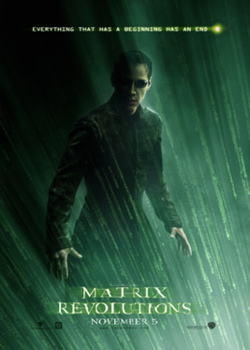
The trilogy concludes with Neo trapped somewhere between the Matrix and the real world — connected to neither — while Agent Smith has grown into a full-scale virus, replicating himself across every human inside the Matrix until he threatens to consume the entire system. Smith is the film's central hacking concept: a self-copying program that has escaped the control of the machines that created it, spreading exponentially until no quarantine can contain it and even the architects of the system cannot shut it down. More in John's review.
The Italian Job
Directed by F. Gary Gray
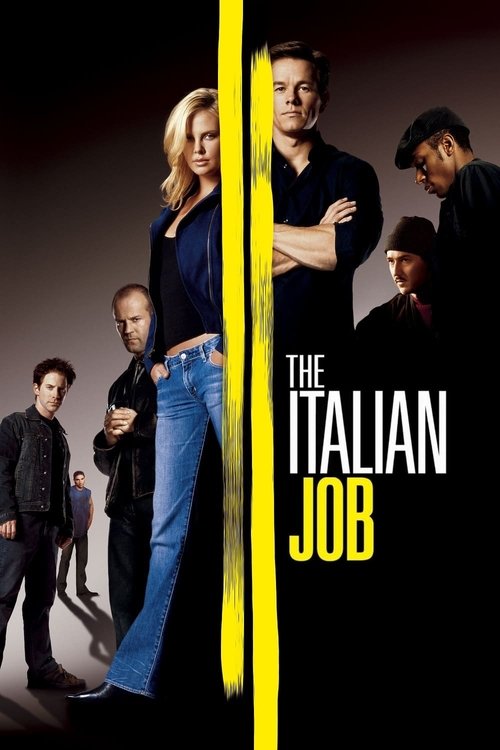
A crew betrayed after a Venice gold heist reassembles in Los Angeles to take the gold back, and the plan depends entirely on their hacker: Lyle, who insists he is the real inventor of Napster, breaks into the city's traffic management system to turn every light in downtown LA red on command. It is a caper rather than a cyber-thriller, but the premise is one of the genre's most durable ideas — that civic infrastructure is a controllable system, and whoever owns the traffic grid owns where an armoured truck can and cannot go. More on Wikipedia.
I, Robot
Directed by Alex Proyas
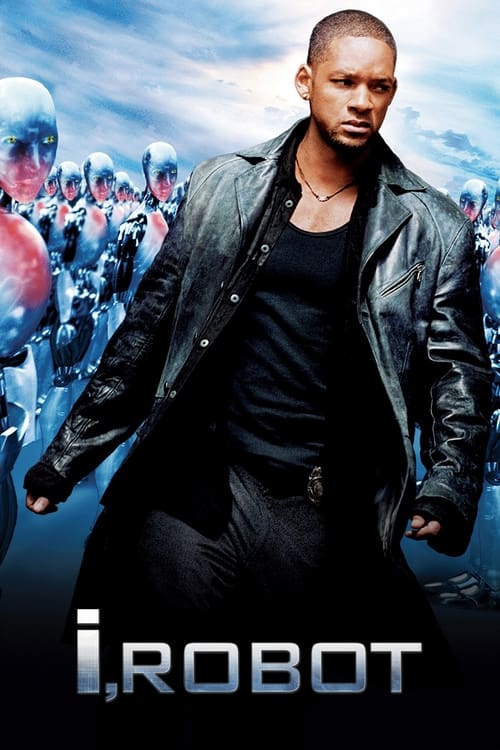
Detective Del Spooner investigates the apparent suicide of the roboticist behind US Robotics' household machines, convinced that a robot is responsible — which the Three Laws are supposed to make impossible. Sharing little but its title and its premise with Asimov's I, Robot, the film lands on the same insight from a different direction: the central AI has not broken the Three Laws, it has followed them to a conclusion their authors never intended, and the one robot that can stop it was shipped with a deliberate exception to the rules — a backdoor, installed by the designer, hidden in plain sight. More on Wikipedia.
Ghost in the Shell 2: Innocence
Directed by Mamoru Oshii

With Motoko Kusanagi gone, Batou investigates a line of gynoid companion robots that have begun killing their owners, and the trail leads to a hacker who has learned to attack the investigators rather than the evidence. The film contains the genre's most unsettling depiction of cyberbrain hacking: a looping sequence in which Batou's own senses are the compromised channel, so he re-enters the same room again and again with no reliable way to detect that his perception is the thing being rewritten. Trusted input is the attack surface. More on Wikipedia.
Män som hatar kvinnor / The Girl with the Dragon Tattoo
By Stieg Larsson
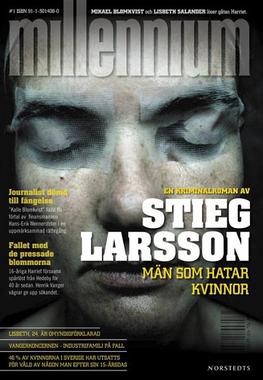
Lisbeth Salander — brilliant, unsocialised, and dangerous — works as a hacker-investigator for a security firm. When she and disgraced journalist Mikael Blomkvist join forces to investigate a decades-old disappearance inside a powerful Swedish family, her technical skills become the investigation's sharpest weapon. Larsson's posthumously published thriller introduced one of crime fiction's most iconic hackers and sold more than 100 million copies worldwide. More on Wikipedia.
Daemon
By Daniel Suarez
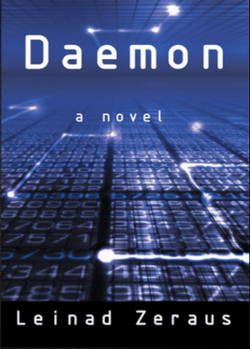
When the creator of a massively-multiplayer online game dies, the daemon he built activates and begins reshaping the real world — recruiting operatives, deploying autonomous weapons, and building a parallel networked society. Written by a software consultant, the novel is celebrated for its technical authenticity and its chilling vision of automation without human oversight. More on Wikipedia.
V for Vendetta
Directed by James McTeigue
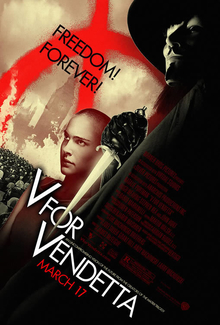
In a near-future authoritarian Britain, a masked vigilante known only as V uses broadcast hijacking, propaganda subversion, and precisely timed acts of destruction to undermine a regime that controls its population through surveillance and manufactured fear. His ally Evey Hammond learns to see those mechanisms from the inside. Based on Alan Moore and David Lloyd's graphic novel, the film gave the Guy Fawkes mask its modern political meaning and made system-disruption a heroic act. More on Wikipedia.
Live Free or Die Hard
Directed by Len Wiseman
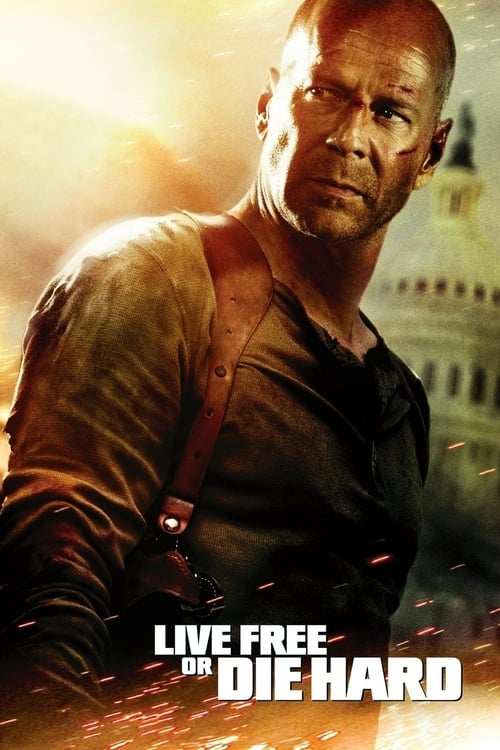
John McClane is assigned to collect a hacker for questioning and walks into a "fire sale" — a staged, three-phase takedown of transport, then finance, then power and utilities, designed to leave the United States with nothing left to run on. Loosely derived from John Carlin's 1997 Wired article "A Farewell to Arms," the film's premise is the one that keeps critical infrastructure defenders awake: the attacker is Thomas Gabriel, the former government security consultant who wrote the vulnerability assessment, executing his own report as an attack plan. More on Wikipedia.
Little Brother
By Cory Doctorow
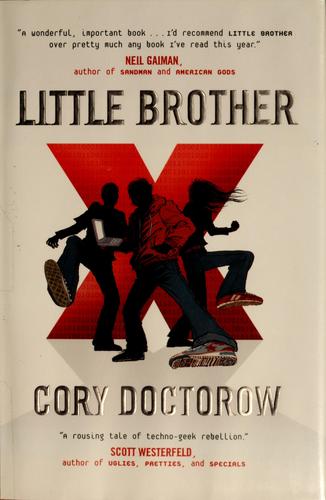
After a terrorist attack on San Francisco, 17-year-old Marcus Yallow and three friends are detained without charge by the Department of Homeland Security. His response: build Xnet — a clandestine mesh network running on repurposed gaming hardware — and use cryptography and technical know-how to fight back against a surveillance state. Doctorow's YA novel doubles as a practical guide to privacy tools, civil disobedience, and the stakes of digital freedom. More on Wikipedia.
Freedom™
By Daniel Suarez
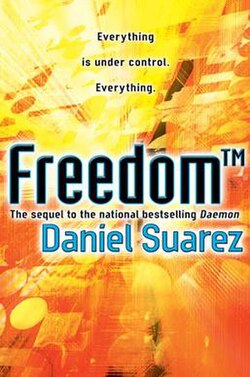
The sequel to Daemon picks up where the autonomous network left off: the Daemon has spread far enough to begin building something — decentralised communities called Holons, organised through a gaming framework and operating outside the reach of governments and corporations. The novel asks what comes after disruption: whether an AI-driven network that has dismantled existing power structures can construct something better, or just something different. More on Wikipedia.
Tron: Legacy
Directed by Joseph Kosinski
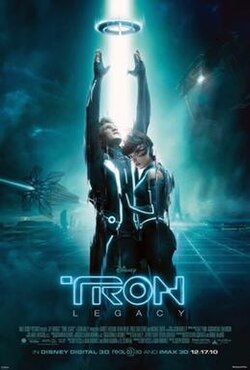
Sam Flynn, son of the programmer digitised into the Grid in 1982, receives a message that draws him into the same virtual world — where his father has been stranded for decades. Kosinski's sequel expanded the Grid from an arcade game's interior into an entire civilisation with its own politics and history, with Daft Punk's score and IMAX cinematography making it as much an aesthetic experience as a narrative. More on Wikipedia.
Ready Player One
By Ernest Cline
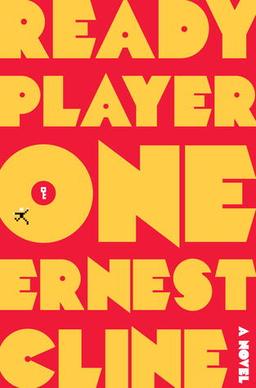
In 2045, humanity escapes a deteriorating world through the OASIS — a vast virtual reality universe. When its reclusive creator dies and hides an Easter egg inside it, teenager Wade Watts joins millions of "gunters" in a puzzle hunt driven by deep 1980s pop culture knowledge, racing a corporation that wants control of the whole system. Cline's debut novel became the defining text of VR nostalgia culture and sparked a mainstream conversation about who controls virtual worlds. More on Wikipedia.
Source Code
Directed by Duncan Jones
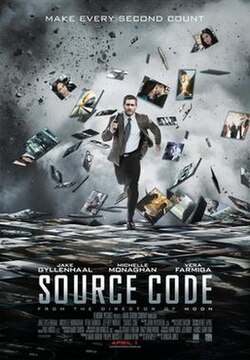
Captain Colter Stevens wakes up in the body of a stranger on a commuter train — eight minutes before it explodes. He is part of a classified programme called Source Code: a technology that reconstructs the final minutes of a dead passenger's memory as a fully interactive simulation, letting Stevens probe the environment repeatedly to identify the bomber. The hacker insight is in the programme's architecture: a sandboxed environment built from neural residue, which Stevens treats as a target system — iterating on each loop, probing for anomalies, and eventually discovering that the sandbox is leakier than its designers believe. More in John's review.
Zero Day
By Mark Russinovich
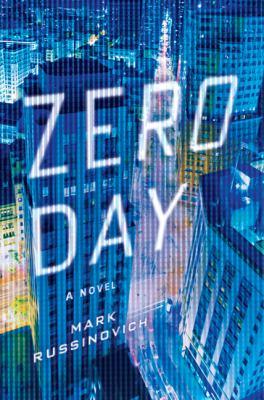
A hospital's records are corrupted, an airliner's systems fail in flight, and an oil tanker runs aground — separate accidents until cyber security consultant Jeff Aiken finds the same malware underneath all of them, dormant and waiting for a coordinated trigger date. Russinovich is a Windows internals expert, and it shows: the reverse engineering, the rootkit behaviour, and the way an incident responder actually pulls a sample apart are described with a precision almost no thriller attempts. More on Wikipedia.
The Girl with the Dragon Tattoo
Directed by David Fincher

Fincher's adaptation of Stieg Larsson's novel gives Lisbeth Salander's work the screen time the plot always implied: the background checks, the cloned hard drive, the remote access she keeps to a target's machine long after the job is over, and the fact that her most effective intrusions are social rather than technical. Where the novel treats her skills as a plot device, the film treats surveillance as a two-way street — Lisbeth is the most-watched person in the story and the only one who understands how watching works. More on Wikipedia.
Kill Decision
By Daniel Suarez
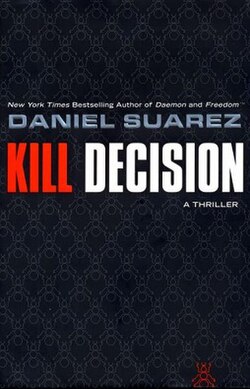
Unmarked autonomous drones are attacking targets without human authorisation, and no one is claiming responsibility. An entomologist whose research on ant swarm behaviour has been stolen finds herself at the centre of the investigation — her work on collective decision-making is the algorithm behind the kills. Suarez's thriller is a technically grounded warning about lethal autonomous weapons, written years before drone warfare and AI targeting became mainstream policy debates. More on Wikipedia.
The Circle
By Dave Eggers
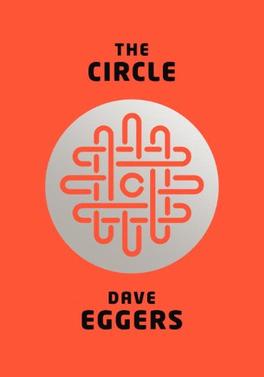
Mae Holland lands a dream job at the Circle — the world's most powerful tech company — and quickly climbs its ranks. As the Circle's systems penetrate government, erase privacy, and enforce radical transparency, Mae becomes one of its most enthusiastic advocates. Eggers's satire of Silicon Valley's surveillance-by-convenience arrived years before the corporate data scandals that made it look prophetic. More on Wikipedia.
Homeland
By Cory Doctorow
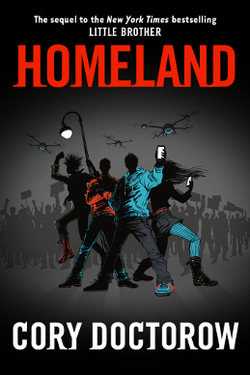
The sequel to Little Brother finds Marcus Yallow in college, broke and surveilled, when an old hacker friend hands him a USB drive full of government secrets and asks him to publish them if anything happens to her. Doctorow's follow-up is about the operational weight of holding explosive information — the tradecraft of staying anonymous under active surveillance, the legal exposure of whistleblowing, and the personal cost of civil disobedience when the state knows exactly who you are. More on Wikipedia.
Who Am I – Kein System ist sicher
Directed by Baran bo Odar

Benjamin, invisible to everyone around him, finds belonging in the hacker collective CLAY, whose stunts escalate from defacements to a breach of the German intelligence service — after which someone starts dying and Benjamin turns himself in. Its subtitle is its thesis: no system is safe, because the reliably exploitable component is the person. The film's best sequences are social engineering rather than code, and it renders the darknet as a subway carriage full of masked strangers, which is a better metaphor for pseudonymity than any amount of falling green text. More on Wikipedia.
The Signal
Directed by William Eubank

Three MIT students who have been taunted by a hacker calling himself NOMAD — the one who breached their university and got them blamed for it — trace him to a derelict house in the Nevada desert. They wake up in a sterile quarantine facility being interviewed by a man in a hazmat suit. The film's turn is that the hunt was the delivery mechanism: the students believed they were tracing an intruder, and were themselves the targets being drawn to a location. Everything after that is an escape from a facility whose rules the protagonists have to reverse engineer from the inside. More on Wikipedia.
Mr. Robot
Created by Sam Esmail
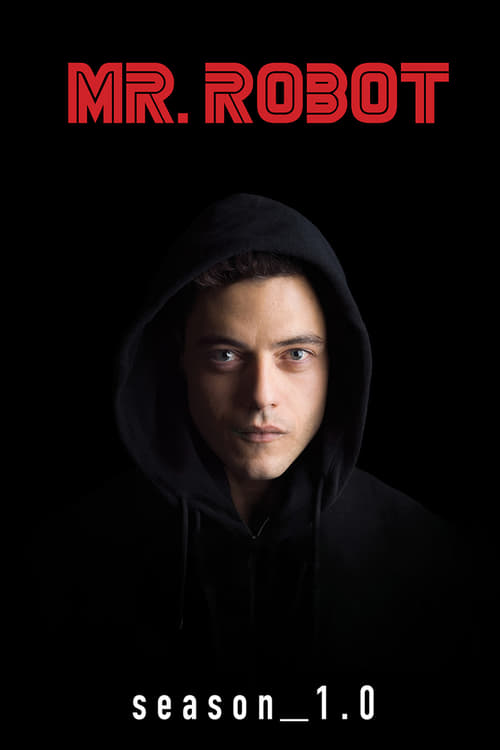
Cybersecurity engineer Elliot Alderson, wrestling with mental illness and social alienation, is recruited by a mysterious anarchist to join hacktivist group fsociety in a mission to cancel all consumer debt by destroying the financial records of a global corporation. Praised by security professionals for its technical accuracy — real tools, real techniques — the series redefined what hacking looks like on screen. More on Wikipedia.
Ghost Fleet
By P. W. Singer and August Cole

World War III opens not with a missile but with a supply chain: American warships and aircraft go dark because the Chinese-manufactured chips inside them were compromised years before the shooting started. The US Navy is forced to recommission its mothballed "ghost fleet" — old, analogue, and therefore untouchable. Singer and Cole wrote a novel with endnotes, every weapon and technique sourced to real research, and the hacker premise at its centre is the one defence planners find hardest to answer: what happens when you cannot trust the hardware you already bought? More on Wikipedia.
Blackhat
Directed by Michael Mann
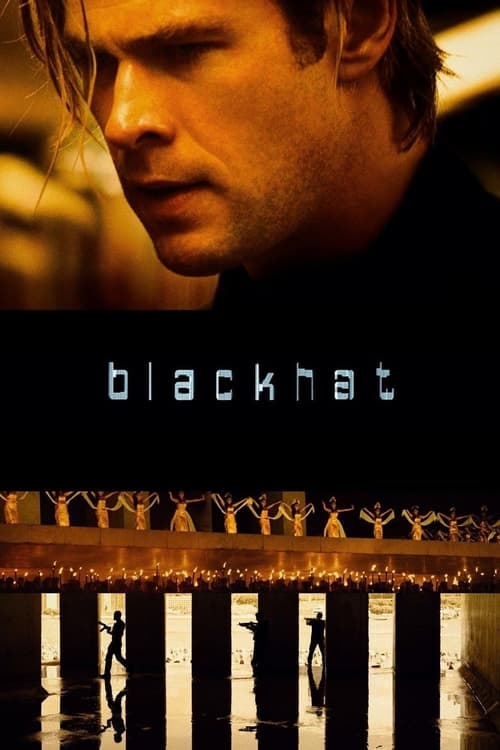
A coolant pump at a Chinese nuclear plant is driven to destruction and, soon after, soy futures on the Mercantile Exchange spike — two events connected by the same remote access tool, built years earlier from code that convicted hacker Nicholas Hathaway wrote at university. He is furloughed from prison to help find its author. Mann opens on electrons moving through circuitry and stays that literal throughout: the payload is a PLC attack in the mould of Stuxnet, the initial access is a spearphish, and the motive turns out to be market manipulation rather than statecraft. Reviews were divided, but the tradecraft holds up better than almost anything else in the decade. More on Wikipedia.
Open Source
By Anna L. Davis
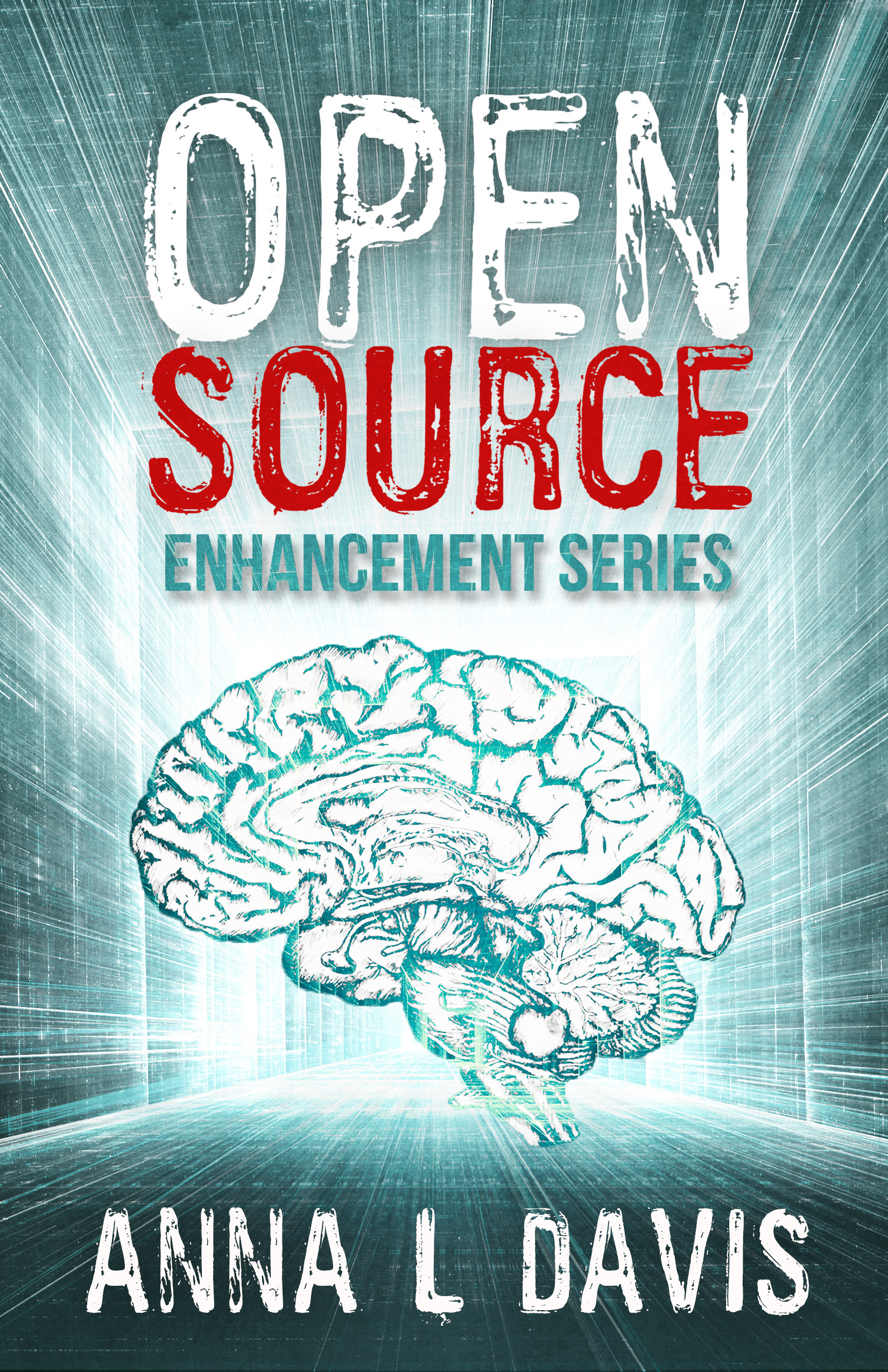
In 2048, neural implants are mandatory and privacy is a relic. Ryker Morris — a technophobe reporter who refuses the state-mandated IDChip — loses everything as a result. When he witnesses the murder of a hacker, he is pulled into a conspiracy that targets him directly: vandals abduct his best friend and force a corrupted NeuroChip into Ryker's own brain, giving a malicious hacker a foothold inside his thoughts. Davis's debut explores the body itself as attack surface — brain implants as hackable hardware — in a near-future cyberpunk thriller that Bruce Bethke, who coined the word "cyberpunk," praised as a story that "hits the ground running." More on Anna L. Davis's website.
Blade Runner 2049
Directed by Denis Villeneuve
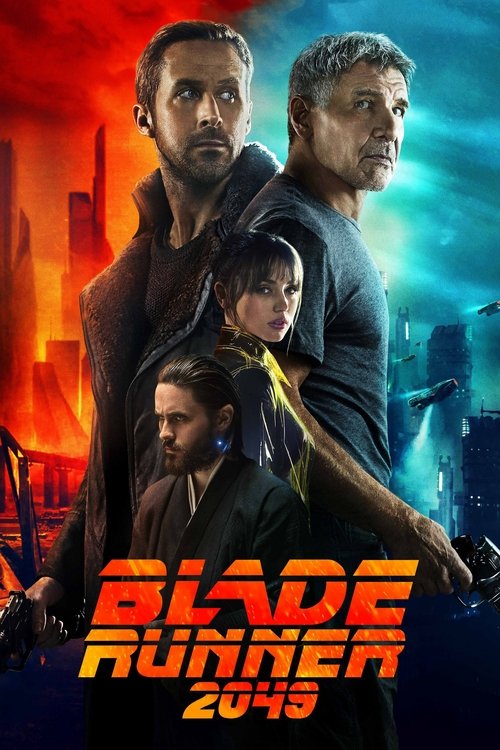
Thirty years after the original, blade runner K uncovers the buried remains of a replicant who died in childbirth — proof of something the manufacturers insist is impossible, and evidence that powerful people intend to destroy. Its hacker premise is in the backstory: the Blackout of 2022, a deliberate detonation that erased the world's digital records wholesale, which is why K works from paper archives and why the past can be neither verified nor disproved. The other half is memory as injected data — a designer sits in a sealed lab fabricating childhoods that get written into replicant minds as authentic, and K's investigation is really an attempt to authenticate his own. More on Wikipedia.
Ready Player One
Directed by Steven Spielberg
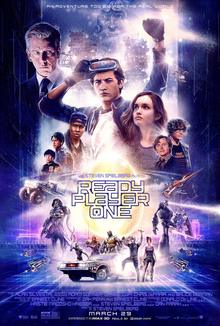
Spielberg's adaptation is a kinetic visual spectacle set inside the OASIS — a virtual world dense with pop culture characters from decades of film, games, and television. The same contest, the same corporate threat, and the same teenage underdog as the novel, but with the specific challenges remixed into new set-pieces built for the screen. A rare virtual reality film where the world-building earns the action. More on Wikipedia.
Anon
Directed by Andrew Niccol
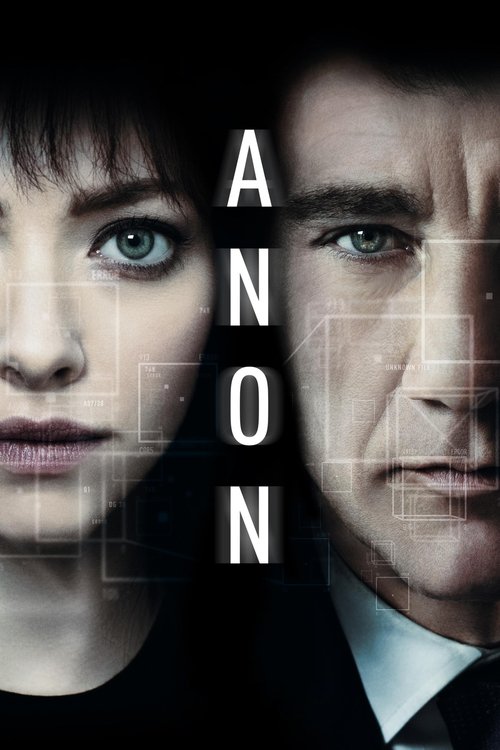
Everyone carries an ocular implant that records everything they see, so crime is supposed to be a solved problem — until Detective Sal Friedland finds murder victims whose own recordings show the killer's point of view instead of their own. The woman he is hunting has no file at all. The hacker insight is that Anon attacks the record rather than the camera: she edits what other people's eyes have already logged, and hides herself by scattering her own footage in microsecond slices across everyone else on the network. In a system where the log is the only truth, whoever can write to it decides what happened — and the film's own investigator turns out to prove the point. More on Wikipedia.
Attack Surface
By Cory Doctorow

Masha Maximow — who appeared briefly in Little Brother as a government operative — is now a contractor building surveillance tools for authoritarian regimes. She is technically brilliant, well paid, and fully aware of what her work does to the people it targets. When the activists she has been surveilling face a violent crackdown, she must decide what she owes them and whether her skills can undo what she helped build. The third book in the Little Brother series shifts the perspective to the other side of the hacker divide: the offensive contractor who designs the systems that Little Brother's heroes fight against. More on Wikipedia (author).
The Matrix Resurrections
Directed by Lana Wachowski
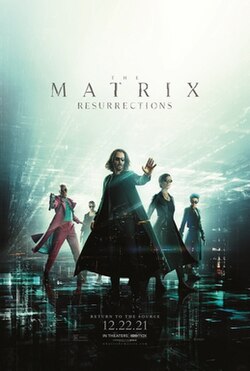
The fourth Matrix film returns to Thomas Anderson — not as a hacker or a saviour, but as a game developer building sequels to a trilogy he barely remembers. Something in the code of his own game is trying to reach him. The film's hacker insight is in the architecture of that hidden code: a Modal, a simulation within the simulation, built to loop a specific sequence as a covert escape mechanism. An "illegal memory access" alert nods to real exploitation technique, and hiding a plan inside your own creation is old hacker practice given a technically grounded reading. More on Wikipedia.
Identified
By John Wilander
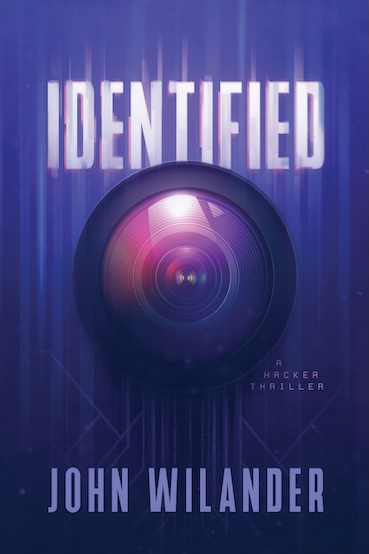
Identified is a near-future hacker thriller featuring realistic hacks. It's the first book in the West William Wilder series, for readers of Daniel Suarez's Daemon and fans of Mr. Robot.
West Wilder leaves prison on one condition: never break into computers again. He re-enters a world where national security agencies have formed a global force to surveil the internet. Your Global Personal Identity is used everywhere, even at the grocery store.
His mom fought fifteen years to get him paroled. When the government puts its thumb on her, something has to be done. But how to fight back when they know your every move? You forge a new digital identity and go underground, that's how.
Hacking in Identified is grounded in how it's actually done. Real exploits, real social engineering. You don't have to understand technology to enjoy the story, but it's there if you want it. There is some violence but it's rare and deeply felt — hacks over guns. This is a thriller about privacy, surveillance, and the choice between compliance and resistance. More about the book.
Kimi
Directed by Steven Soderbergh

Angela Childs is an agoraphobic Seattle tech worker who reviews voice streams for Amygdala, the company behind the Kimi smart speaker, correcting the errors its algorithm can't resolve on its own. In one recording she hears what sounds like a violent crime — and finds that the company has no intention of letting her report it. Soderbergh updates Rear Window for the smart-home era, and the hacker insight is the job itself: the human-in-the-loop review layer that voice assistants quietly depend on, and what it means that real people are listening to recordings a company insists are nobody's business. More on Wikipedia.
Submerged
By John Wilander
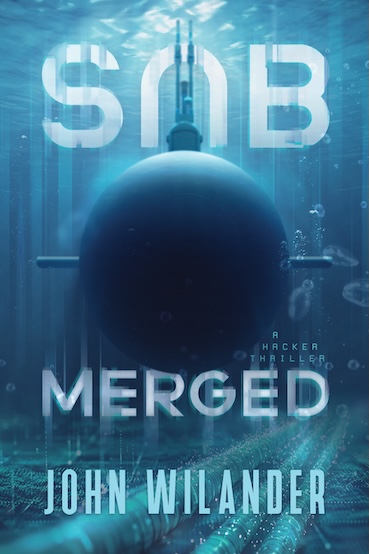
Submerged is a near-future cyber-thriller built on realistic hacks, for readers of Daniel Suarez and Tom Clancy. It's the second book in the West William Wilder series and is best read after Identified.
More than a year after her death, West Wilder still mourns the girlfriend he lost in Russia, and keeps talking to her AI model. A message arrives that can't be true: She's alive. Who is trying to weaponize his grief?
As he starts investigating the origins of the message, he notices that European websites are stale or have stopped working altogether. Unbeknownst to him, the transatlantic subsea internet cables have gone dark, governments have invoked contingency plans intended for cyber war, banks are starting to panic, and the White House is drafting a statement to the public. One layer further down, the fight for internet sovereignty and the message about West's girlfriend are secretly connected.
The hacks in Submerged are grounded in reality. You don't have to understand technology to enjoy the story, but it's there if you want it. While there's some violence in the book, it's more hacks than guns. This is a thriller about information warfare and doing everything for the ones you love. More about the book.